
Last updated November 3, 2026
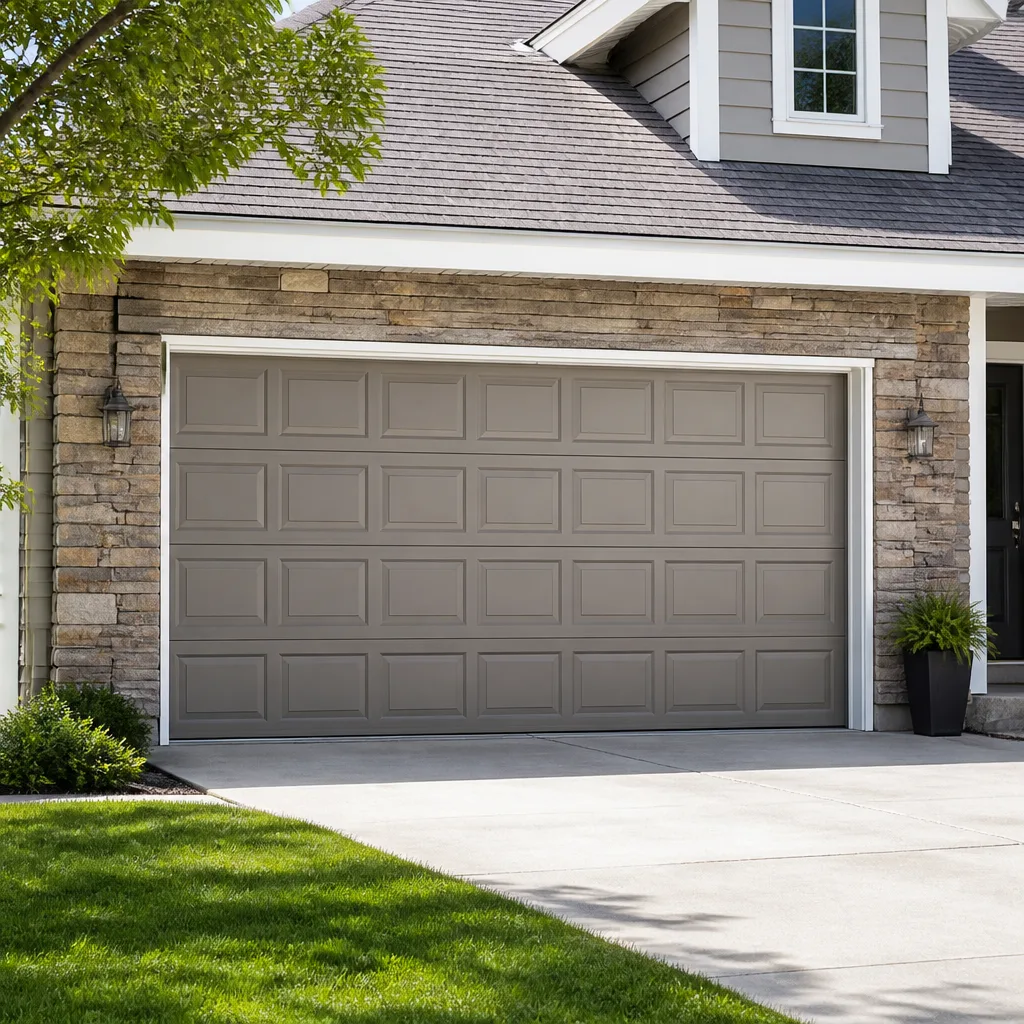 Raised-panel steel
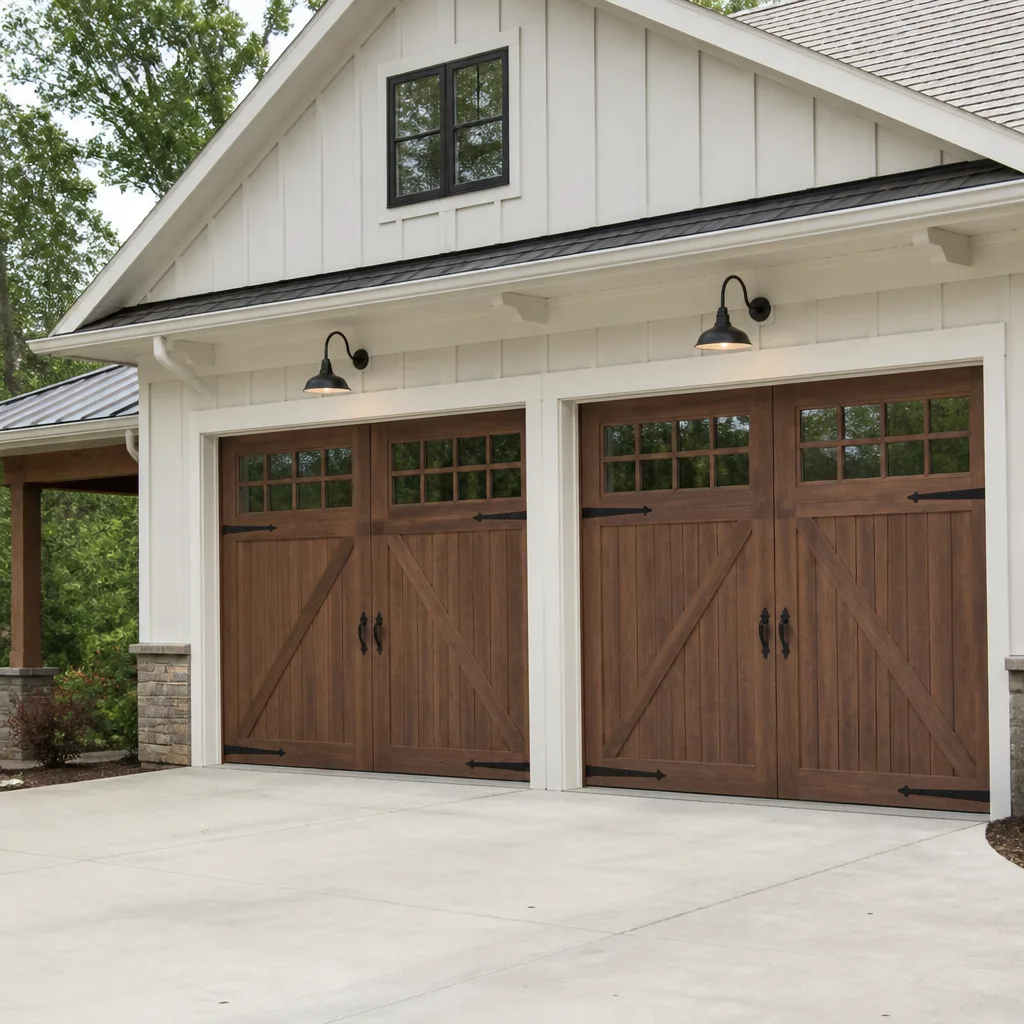 Carriage house
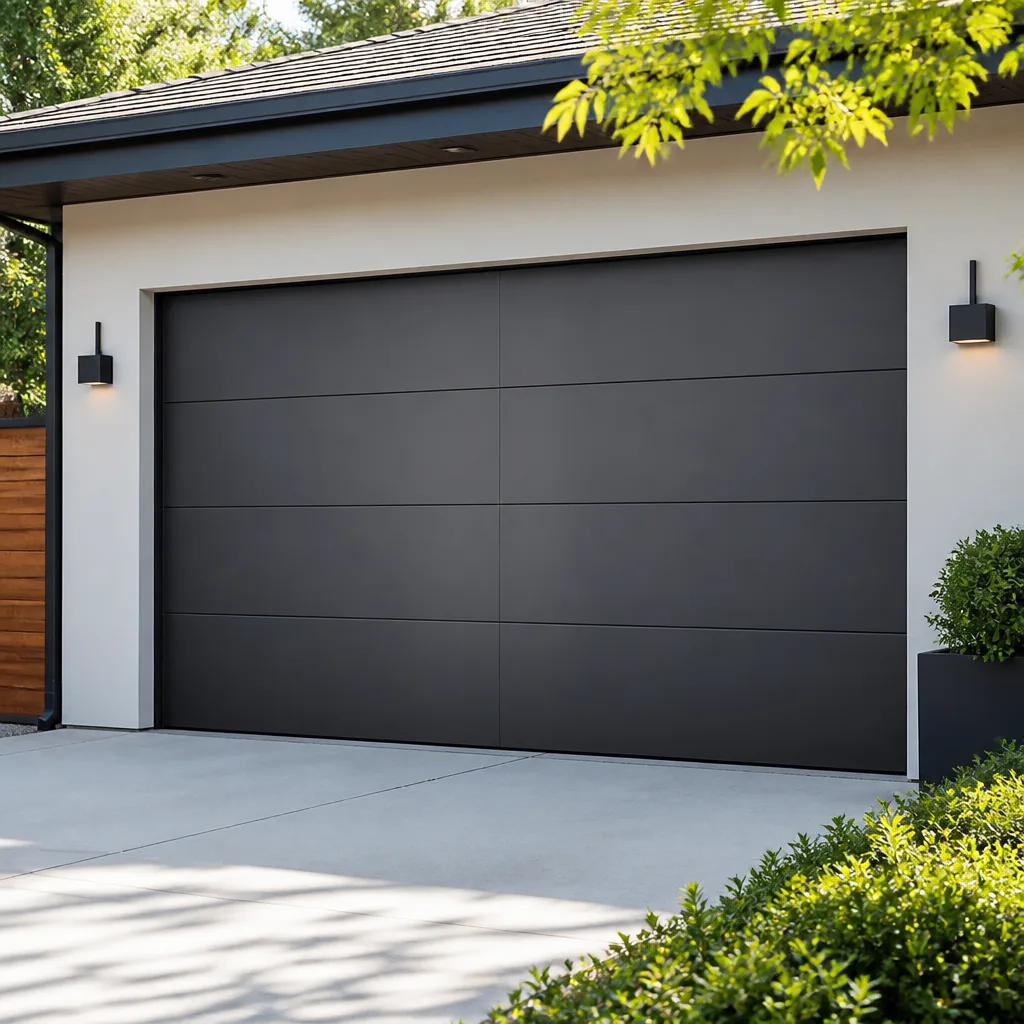 Modern flush
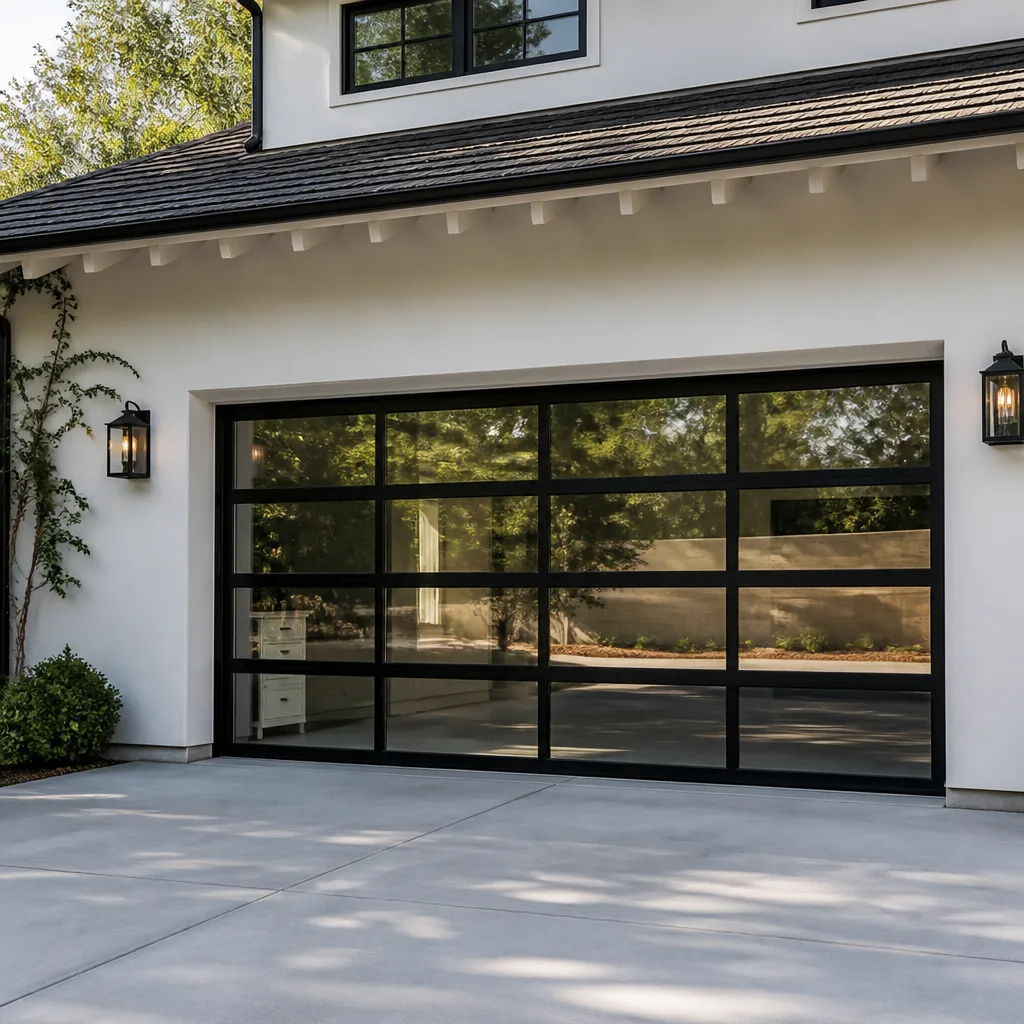 Full-view glass
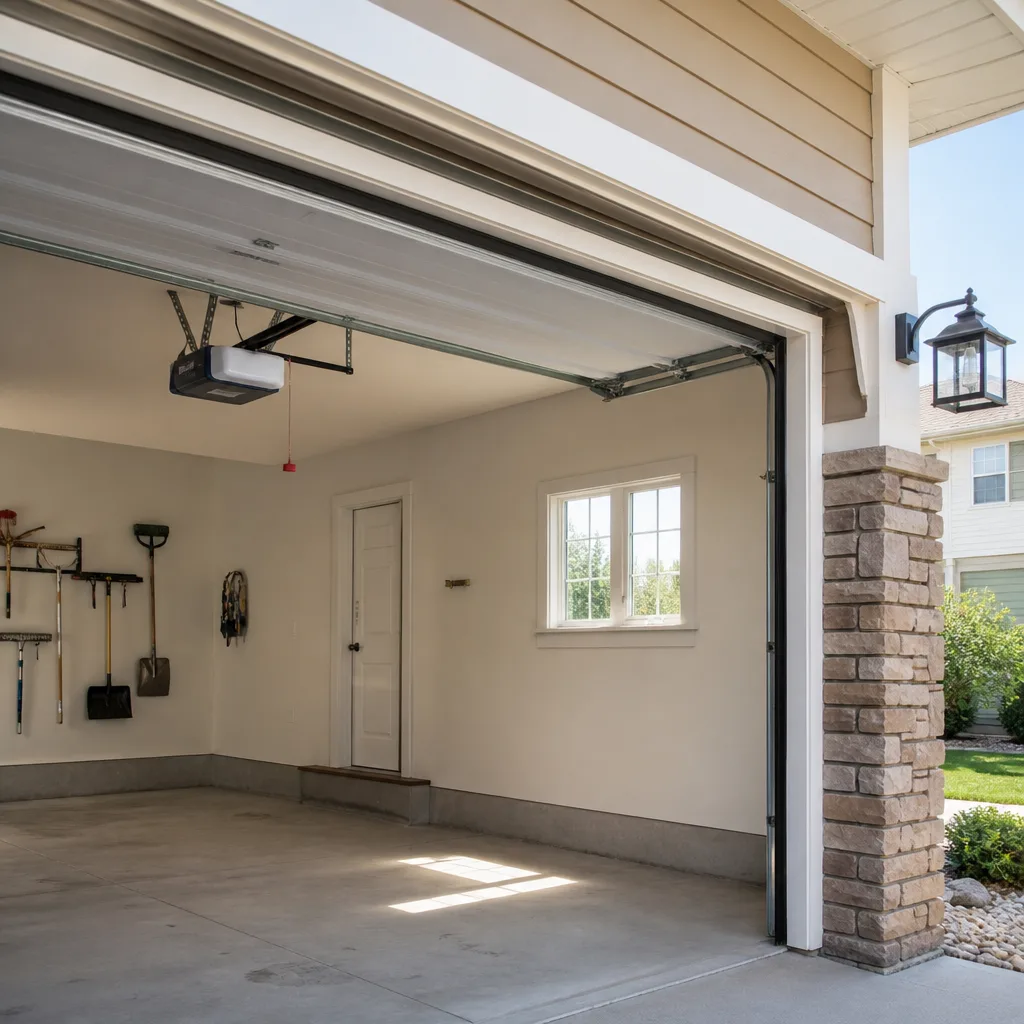 LiftMaster openers
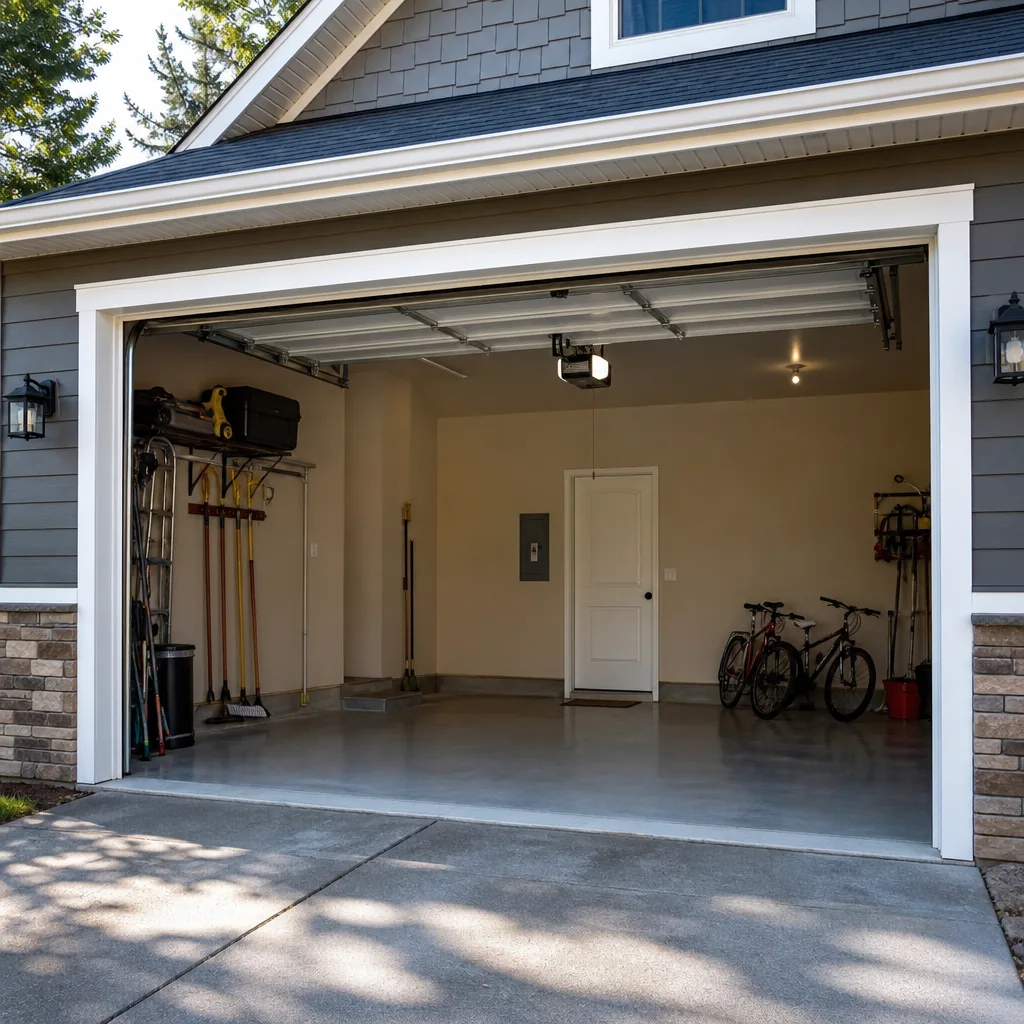 Chamberlain openers
Full 25-point door and opener safety check with every visit - springs, cables, rollers, tracks, and your LiftMaster or Chamberlain opener included
You get a price before we start. It does not change when the truck arrives.
Get your free estimateThe Complete Garage Door Repair Guide for Oxnard Homeowners
Most garage door repair guides were written for Phoenix or Dallas. They assume dry heat, predictable temperature swings, and hardware that rusts on a decade-long timeline. Oxnard doesn’t work that way. Your garage door sits in salt air, marine layer humidity, and coastal temperature shifts that corrode springs, cables, and rollers on a completely different schedule. The fixes that keep a desert door running for 15 years will fail here within a season or two. This guide maps Oxnard’s specific failure patterns to the right repairs, so you stop treating symptoms and start solving the actual problem your door is showing you.
Quick Answer
Garage door repair in Oxnard usually comes down to one of five problems: broken torsion springs, snapped cables, worn rollers, misaligned tracks, or a failed opener. Coastal corrosion accelerates all of them compared to inland California, which means spring and cable replacement cycles in Oxnard are shorter than national averages. The right fix depends on your door’s brand, age, and which neighborhood you’re in, but most repairs fall between $150 and $400 when caught early.
Styles & brands we work with
- Raised-panel steel
- Carriage house
- Modern flush
- Full-view glass
- LiftMaster openers
- Chamberlain openers
Table of Contents
- Why Oxnard’s Climate Is Harder on Garage Doors
- Neighborhood-Level Breakdown: Harbor Tract vs. River Ridge
- How to Read Your Door’s Failure Signals
- DIY-Safe Repairs for Oxnard Homeowners
- Repairs You Should Never Attempt Yourself
- Repair or Replace: Coastal Wear Indicators
- Opener-Specific Problems and Brand Notes
- Common Mistakes to Avoid
- When to Call a Professional
- Frequently Asked Questions
Why Oxnard’s Climate Is Harder on Garage Doors
Oxnard sits in a narrow coastal band where the Pacific Ocean meets the Oxnard Plain. That geography creates two conditions that wreck garage door hardware faster than almost anywhere else in Southern California. The first is salt air. Prevailing onshore winds carry marine aerosols inland, and those microscopic salt particles settle on metal surfaces, accelerating oxidation on springs, cables, hinges, and track brackets. The second is the marine layer. Oxnard averages over 200 days of morning overcast per year, and that humidity sits on metal components for hours before the sun burns it off.
What does this mean for your door? Torsion springs in Oxnard typically lose 20 to 30 percent of their service life compared to identical springs installed in inland cities like Bakersfield or Lancaster. A spring rated for 10,000 cycles in a dry climate might fail at 7,000 cycles here. Cables fare even worse. The thin galvanized coating on standard lift cables gets compromised by salt pitting, leading to fraying and snapping, often within 5 to 7 years of installation.
We’ve seen this pattern consistently across Oxnard service calls. In our experience, homeowners near the water in areas like Hollywood Beach, Silver Strand, and Channel Islands Harbor see the most aggressive corrosion. Homes further inland, past the 101 toward the River Ridge area, get a reprieve, but not as much as people assume. The marine layer travels further inland than most residents realize.
What This Means for Your Repair Decisions
- Spring replacement is a wear item here, not a one-time event. If your door is 8 to 10 years old and you live within three miles of the coast, plan for spring replacement as routine maintenance, not an unexpected emergency.
- Galvanized hardware isn’t optional. Standard zinc-plated bolts, brackets, and hinges rust through faster in Oxnard than powder-coated or stainless alternatives. When you replace parts, the material matters.
- Lubrication needs a schedule. In dry climates, garage door lubrication is an annual chore. In Oxnard, salt and humidity mean quarterly lubrication with a silicone-based spray on rollers, hinges, and springs keeps the door running instead of grinding.
Neighborhood-Level Breakdown: Harbor Tract vs. River Ridge
Oxnard’s housing stock spans multiple construction eras, and your garage door behaves differently depending on which era your home came from. This isn’t something generic guides cover, but it changes what repairs you should expect.
Older Harbor Tract Homes and Mid-Century Construction
Homes built in the 1950s through 1970s in neighborhoods like the Harbor Tract, La Colonia, and portions of South Oxnard typically have wood-frame garage openings with original or long-outdated hardware. These doors are usually 8×7 or 9×7 wood or early steel doors with extension spring systems, not the torsion setups common in newer homes.
What we see regularly in these neighborhoods:
- Extension spring failures are more common than torsion spring failures. The older spring-and-pulley arrangement corrodes at the pulley wheels, and when a spring snaps, the door usually drops hard on one side.
- Wood rot at the bottom panel from decades of moisture wicking up from the concrete slab. Salt air accelerates this if the bottom seal has been compromised.
- Track sag and misalignment from settling slabs. Older Oxnard foundations shift, and the track that was perfectly perpendicular in 1962 isn’t anymore.
- Opener mismatch. Many of these homes have newer openers bolted to older doors, and the opener’s force settings are rarely calibrated correctly for the heavier wood door. This causes premature gear wear in the opener.
Newer River Ridge and North Oxnard Construction
Homes built from the 1990s onward in River Ridge, Mandalay Bay, and newer North Oxnard developments generally have steel sectional doors with torsion spring systems. These doors are lighter, better sealed at the factory, and designed to modern safety standards, including photoelectric sensors and auto-reverse mechanisms.
That doesn’t make them problem-free. Here’s what we see in these areas:
- Bearing and roller failures before spring failures. The nylon rollers with sealed bearings that come standard on many newer doors wear out faster than people expect in the coastal humidity. A grinding or squealing door isn’t the spring, it’s the rollers.
- Logic board and sensor issues tied to the opener rather than the door itself. Salt air infiltration into the opener housing causes corrosion on circuit contacts, especially in garages with poor ventilation. This is particularly common with newer units that ran through the heavy rain seasons of 2023 and 2024.
- Section joint deterioration. The horizontal seams between steel panels are where salt moisture collects. Once the factory seal degrades, rust starts at the seams and works inward. You’ll see bubbling or discoloration along panel joints before you see it on flat panel faces.
The repair strategy is different for each neighborhood. An older Harbor Tract door with a broken extension spring might also need new pulleys, cables, and a bottom panel assessment before the door is safe. A newer River Ridge door with a grinding roller issue usually just needs roller replacement and a track cleanup. Knowing which situation you’re in saves you from paying for repairs you don’t need, or missing one that’s about to cascade.
How to Read Your Door’s Failure Signals
Garage doors talk before they fail. The trick is knowing what each signal means and how urgently you need to act on it. Here’s a diagnostic breakdown by symptom, sound, and movement pattern. This is what we walk through on every Garage Door Repair in Oxnard call.
Sound Signals
- A loud bang from inside the garage while the door is closed or opening usually means a torsion spring snapped. Treat this as an emergency. The door is now unbalanced and dangerous to operate.
- A grinding or metal-on-metal squeal that continues while the door moves typically points to worn rollers or dry bearings. This is a maintenance issue now, but ignoring it turns into a track repair problem later.
- A rhythmic thumping or bumping as the door travels suggests a bent track section or a panel that’s catching somewhere. Your door shouldn’t make any rhythmic noise beyond the opener motor itself.
- A chattering or clicking sound near the opener head often indicates a failing drive gear, especially on chain-drive units. The teeth strip slowly, and the noise gets worse before the opener stops moving the door entirely.
Movement Signals
- The door rises unevenly, one side lagging behind the other, points to a broken cable, a bent track, or a spring that’s losing tension. When we see this in Oxnard, salt-corroded cable drums are the usual culprit.
- The door drops quickly when closing instead of lowering smoothly is a red flag for spring failure or cable slippage. A properly balanced door should stay put at any point in its travel if you release the opener.
- The door reverses before hitting the floor for no apparent reason is usually a sensor alignment issue or an obstruction in the photo eye path. In Oxnard, salt film on the sensor lenses is a common cause that a quick wipe fixes.
- The door shakes or shudders during operation suggests loose hardware, worn rollers, or a track that’s out of square. Coastal corrosion loosens bolts faster than inland homes experience.
Visual Signals
- Frayed cable strands near the drum or bottom bracket. If you can see individual wire strands separating from the cable, replacement is urgent. A snapped cable under load can whip violently.
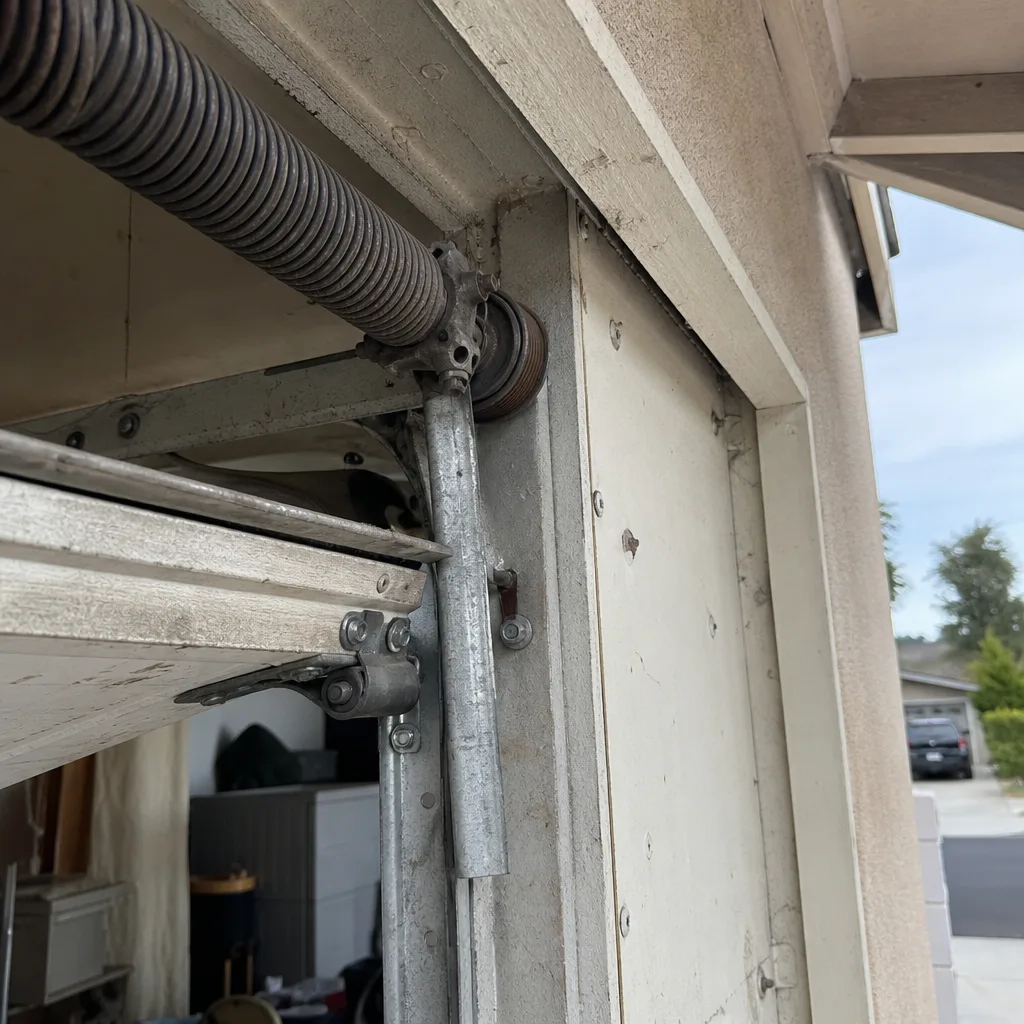
- A visible gap or stretch in the spring. Torsion springs should look tight and continuous. A visible coil gap means the spring has failed internally.
- Rust pitting or bubbling on track surfaces. If your tracks look pitted, the smooth rolling surface is degrading. This is a coastal Oxnard signature and will accelerate roller wear.
- Daylight visible through panel seams or around the door edges. This indicates worn seals or panel separation, which lets in moisture that accelerates everything else.
DIY-Safe Repairs for Oxnard Homeowners
Some garage door maintenance is genuinely safe for a homeowner with basic tools and patience. These tasks don’t involve stored tension or load-bearing parts under stress, and they don’t require specialized equipment. Here’s what you can handle yourself in Oxnard.
1. Bottom Seal Replacement
The rubber or vinyl strip along the bottom of your door degrades faster in coastal air. Salt and moisture break down the material, leaving gaps that let in water, pests, and cold maritime air. Replacing it is straightforward: slide the old seal out of the retainer channel, clean the channel, and slide the new seal in. Do this every 3 to 4 years in Oxnard’s climate. Cost: $15 to $40 for the seal. Time: 30 minutes.
2. Sensor Alignment and Cleaning
Photo eye sensors on either side of the door track sometimes drift out of alignment from vibration or get coated with salt film. If your door reverses for no reason, check both sensors. The small LED lights on each unit should be solid, not blinking. Wipe the lenses with a dry cloth, then adjust the mounting brackets until both lights hold steady. This fixes roughly 20 percent of no-close complaints we see in Oxnard.
3. Track Cleaning and Basic Lubrication
Tracks accumulate salt grit, dust, and spider debris. A dry track against dry rollers creates friction that mimics a mechanical problem. Clean the vertical and horizontal track surfaces with a rag, then apply a silicone-based lubricant to rollers, hinges, and springs. Avoid WD-40 on moving parts; it’s a degreaser that strips what little lubrication exists. Marine-grade silicone works best for Oxnard’s salt environment. Frequency: every 3 months within coastal neighborhoods, every 6 months inland.
4. Weatherstripping Inspection and Replacement
Side and top seals keep moisture out of the garage. In Oxnard, these perished rubber strips are a primary moisture entry point. Run your hand along the seals with the door closed and feel for gaps or stiff, cracked material. Replacement strips are cheap and slide into the existing channels.
Repairs You Should Never Attempt Yourself
Some garage door work carries real injury risk. The two components that hurt people are torsion springs and lift cables. Both are under extreme tension, and both can release that energy instantly and violently if handled incorrectly. This isn’t overcaution. Torsion springs store enough energy to throw a metal winding bar through drywall, break bones, or cause fatal injury. Cable failures are similarly dangerous because they fail under load, and the whip-back can cut deep.
Here’s the honest breakdown of what not to touch:
- Torsion springs: The spring above your closed door that twists to counterbalance the door’s weight. Winding and unwinding these requires specialty bars, correct spring sizing, and precise winding counts. Guess wrong and the spring can unload catastrophically.
- Lift cables: The steel cables running from the bottom brackets up to cable drums. They hold the door’s weight when the spring system fails, and they snap without warning. Replacing a cable requires de-tensioning the spring system first, which is the dangerous part.
- Cable drums: The spools at each end of the torsion tube. Salt-corroded drums in Oxnard seize up and need replacement with proper re-tensioning. This is not a wrench-and-eyeball job.
- Extension spring replacement on older doors: The long springs running along the horizontal tracks on pre-1980s doors. If one has already snapped, the other is likely compromised too. The replacement requires safety cables through the spring core and correct sizing for the door weight.
- Track repair of a door that has come off its rails: If the door jumped the track or a track section bent, the door’s weight is uncontrolled. Repositioning a door that has slipped its rollers requires supporting the door safely and re-aligning track under load.
For any of these, call a trained professional. The risk to your hands, face, and body isn’t worth the few hundred dollars a repair costs. Our Garage Door Repair Oxnard home page outlines what proper repair includes and what to expect.
Repair or Replace: Coastal Wear Indicators
Coastal Oxnard poses a decision that inland homeowners rarely face: when does patching a corroding door become throwing good money after bad? The answer depends on what we find during inspection, but some indicators point clearly toward replacement.
When Repair Makes Sense
- The door panel itself is structurally sound, with no rust-through or section separation. Surface rust on hardware is fixable; surface rust on panels is cosmetic but spreads in Oxnard’s environment.
- The failure is isolated to a single component: one spring, one cable, one roller set. If the rest of the system is within its service life, replacing the failed part is the right move.
- The opener is functional and the door is structurally intact. A door that just needs a spring or cable replacement will usually run fine afterward.
When Replacement Makes More Sense
- Rust-through on multiple panels, especially along bottom sections and horizontal seams. Once steel rusts through, the panel’s structural integrity is gone. New panels don’t match old doors in color or seal integrity, so this usually points to full replacement.
- Repeated spring failures within 3 to 4 years. If you’ve replaced torsion springs twice in a short window, the door’s weight or balance is the root problem, not the spring. A new door with matched springs solves the cycle.
- Bent track sections or a twisted door frame. Track repair on a compromised opening is a stopgap. If the door has come off its rails or the track has bent from an impact, replacement is often cheaper long-term than repeated repairs.
- Opener failures on a door older than 15 years. Older doors are heavier, less balanced, and lack modern safety features. A new opener bolted to an old door is a mismatch in force requirements and cycle ratings. If the door predates current safety standards, this is the moment to consider Garage Door Installation in Oxnard for both the door and opener.
The honest answer we give homeowners when asked “repair or replace” is that we’ll tell you which one makes sense. Sometimes we quote a repair and the math says replacement is smarter. We’d rather tell you that upfront than send a tech out twice within a season.
Opener-Specific Problems and Brand Notes
Garage door openers in Oxnard fail differently than the doors they operate. The opener is a motorized unit mounted to the ceiling, vulnerable to salt air infiltration, voltage spikes, and mechanical wear in the drive system. The opener’s job is to lift a balanced door. When the door is unbalanced due to spring or cable issues, the opener absorbs that extra load and wears out faster. Many opener “failures” are actually a symptom of door problems that got ignored.
That said, opener-specific issues fall into predictable categories. Belt-drive units, common on LiftMaster and Chamberlain models, are quieter than chain-drive but the belts stretch over time and slip on the drive sprocket. Chain-drive units, typical of Craftsman and older Genie models, wear out drive gears and sprockets that make a distinct chattering noise before failing. Smart openers with Wi-Fi modules, which dominate newer LiftMaster and Chamberlain lineups, sometimes lose connection to the network, which is a reset or firmware issue rather than a mechanical one.
We work on all of these. If your opener is a Wayne Dalton, Craftsman, Raynor, or LiftMaster unit, we carry the diagnostic approach specific to that brand’s drive system and logic board layout. Openers aren’t interchangeable in their failure modes. A Craftsman chain-drive from 2008 fails through gear wear. A LiftMaster belt-drive from 2019 fails through belt stretch or logic board corrosion. Knowing which one you have before diagnosing saves time. Our Garage Door Opener Repair in Oxnard page covers the specifics of what we diagnose and fix.
Common Opener Failures We See in Oxnard
- Logic board corrosion from salt air: The circuit board inside the opener head gets exposed to humid, salt-laden air through ventilation slots. Over time, contact points oxidize and the board stops sending signals reliably. This happens faster near the coast, especially in garages without cross-ventilation.
- Drive gear stripping on chain-drive units: The nylon gear inside the opener head is designed to fail before the motor does. When it strips, the motor runs but the door doesn’t move. This is a $120 to $200 repair on most brands.
- Travel limit drift: Openers use limit switches to know when to stop. In Oxnard’s temperature swings between cool coastal mornings and hot inland afternoons, these switches drift and the door stops short or runs too long. Recalibration fixes it.
- Remote and keypad signal loss: Older remotes get finicky as the internal battery ages, but Salt air corrodes remote internals faster than inland. A new remote is the fix, not a new opener.
- Safety sensor failure: Same salt film that coats the lenses also corrodes the sensor’s internal wiring. When cleaning doesn’t fix a blinking light, the sensor needs replacement.
Common Mistakes to Avoid
- Ignoring the first grinding sound. A squealing or grinding roller doesn’t heal itself. It wears the roller bearing further and then starts carving into the track. A $15 roller replacement becomes a $200 track job because it waited six months.
- Lubricating with WD-40. WD-40 strips lubricant and leaves a residue that collects salt grit. Use silicone spray on rollers, hinges, and springs. In Oxnard’s marine air, the wrong lube actively worsens corrosion by stripping protective coatings.
- Replacing only one spring when both are old. If one torsion spring snapped, the other is the same age, same cycle count, and same corrosion level. Replacing only the broken one means the other fails soon and you pay for a second service call. Both springs should be replaced as a set.
- Using the door manually after a spring failure. When a spring snaps, the door loses its counterbalance. The door weighs 150 to 300 pounds depending on construction. People hurt their backs, shoulders, and hands trying to muscle up an unbalanced door. Leave it alone and call for repair.
- Waiting to replace a frayed cable. Cables don’t fray politely. They snap under load, and when they snap, the door drops and the cable whips. If you can see loose strands, the cable is done. Call before it fails.
- Assuming a new opener fixes an old door problem. We’ve seen homeowners replace an opener that “wasn’t working” when the actual problem was a broken spring. The old opener didn’t fail; it was being asked to lift a door that weighed twice what it should. The new opener will fail the same way.
- Ignoring rust pitting on the track. Once track surfaces lose their smooth finish, every roller that travels over them wears faster. The pitting doesn’t reverse. The track needs replacement, and delaying just means paying for rollers and tracks instead of tracks alone.
When to Call a Professional
Call a professional when the problem involves stored tension, load-bearing components, or anything you can’t see clearly. A snapped torsion spring, a frayed cable, a door off its track, a bent track section, or an opener that’s grinding without moving the door are all professional-repair scenarios. So is any repair you’re not absolutely confident you understand. The cost of a service call is less than the cost of a hospital visit or a botched DIY that damages the door further. Garage Door Repair Oxnard offers free estimates in Oxnard, call (833) 706-7472 and we’ll assess the situation and tell you what you’re actually dealing with before any work is quoted.
Frequently Asked Questions
Most garage door repairs in Oxnard run between $150 and $400. Spring replacement typically costs $180 to $340 for a pair of torsion springs, cable replacement runs $120 to $220, roller replacement is $90 to $180, and track repair or replacement ranges from $150 to $450 depending on the extent of the work. Coastal corrosion sometimes means additional hardware replacement, so exact pricing requires seeing the door. Call (833) 706-7472 for a free estimate and an exact number before any work starts.
In most cases, yes. We carry common spring sizes, cables, rollers, and opener parts on our service vehicles, which means a single visit usually completes the repair. The price is quoted and agreed before any work begins, so there are no surprises on the invoice. Call (833) 706-7472 and we’ll tell you when we can be there.
No. The price we quote before starting work is the price you pay. If the inspection reveals additional damage beyond what you described, we’ll show you, explain the options, and give you a revised quote before proceeding. You’re never committed to a higher price without agreeing to it first.
We service the eight most widely installed garage door and opener brands in North America: LiftMaster, Chamberlain, Genie, Clopay, Amarr, Wayne Dalton, Craftsman, and Raynor. If your door or opener is one of these, we have the brand-specific training and parts access to fix it correctly. If it’s an older or less common brand, we’ll tell you honestly what we can and can’t source.
Every three months if you live within three miles of the coast, and every six months if you’re further inland. Use a silicone-based spray on rollers, hinges, and springs. Avoid petroleum-based lubricants, which attract salt grit and accelerate corrosion. This quarterly habit is the cheapest thing you can do to extend your door’s service life in Oxnard’s marine air.
Broken torsion springs, by a wide margin. Salt air shortens spring life in Oxnard compared to inland cities, and most homeowners don’t realize their springs are nearing failure until they snap. If your door is older than eight years and you live near the coast, plan for spring replacement before it becomes an emergency. Call (833) 706-7472 for a spring inspection and a quote.
The Bottom Line
Oxnard’s garage doors face a harsher environment than most guides acknowledge. Salt air, marine layer humidity, and coastal temperature swings corrode springs, cables, rollers, and openers on an accelerated schedule. The neighborhoods matter too. Older Harbor Tract homes deal with extension spring failures and wood rot, while newer River Ridge construction sees roller bearing failures and opener logic board corrosion. The most important habits for Oxnard homeowners are quarterly lubrication with the right products, prompt attention to early warning sounds, and making the repair-or-replace decision honestly rather than patching a door that has reached the end of its coastal service life. For more guides & resources, visit our blog. When something breaks, call (833) 706-7472 for a free estimate. We’ll tell you what’s wrong, what it costs, and whether repairing or replacing makes more sense.
Written by the team at Garage Door Repair Oxnard, serving Oxnard since 2016.
See the difference
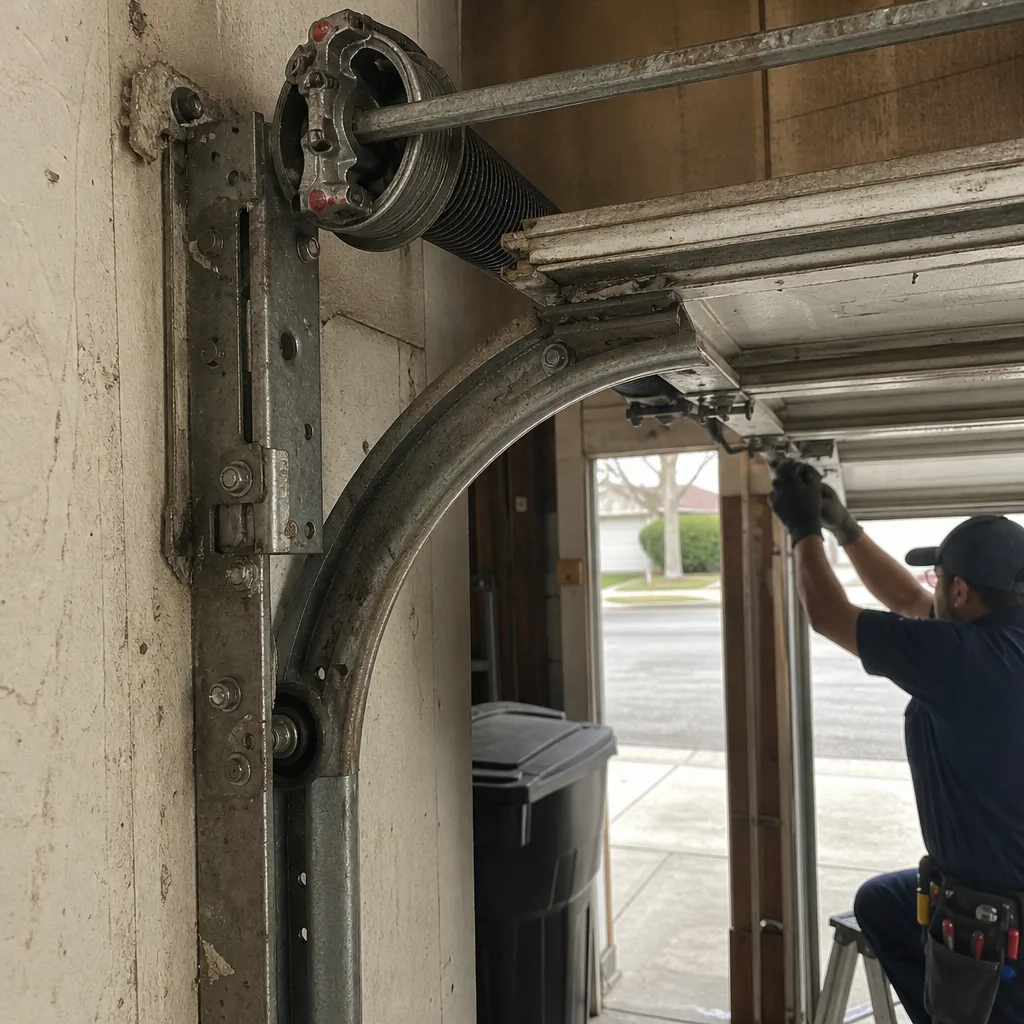 Before
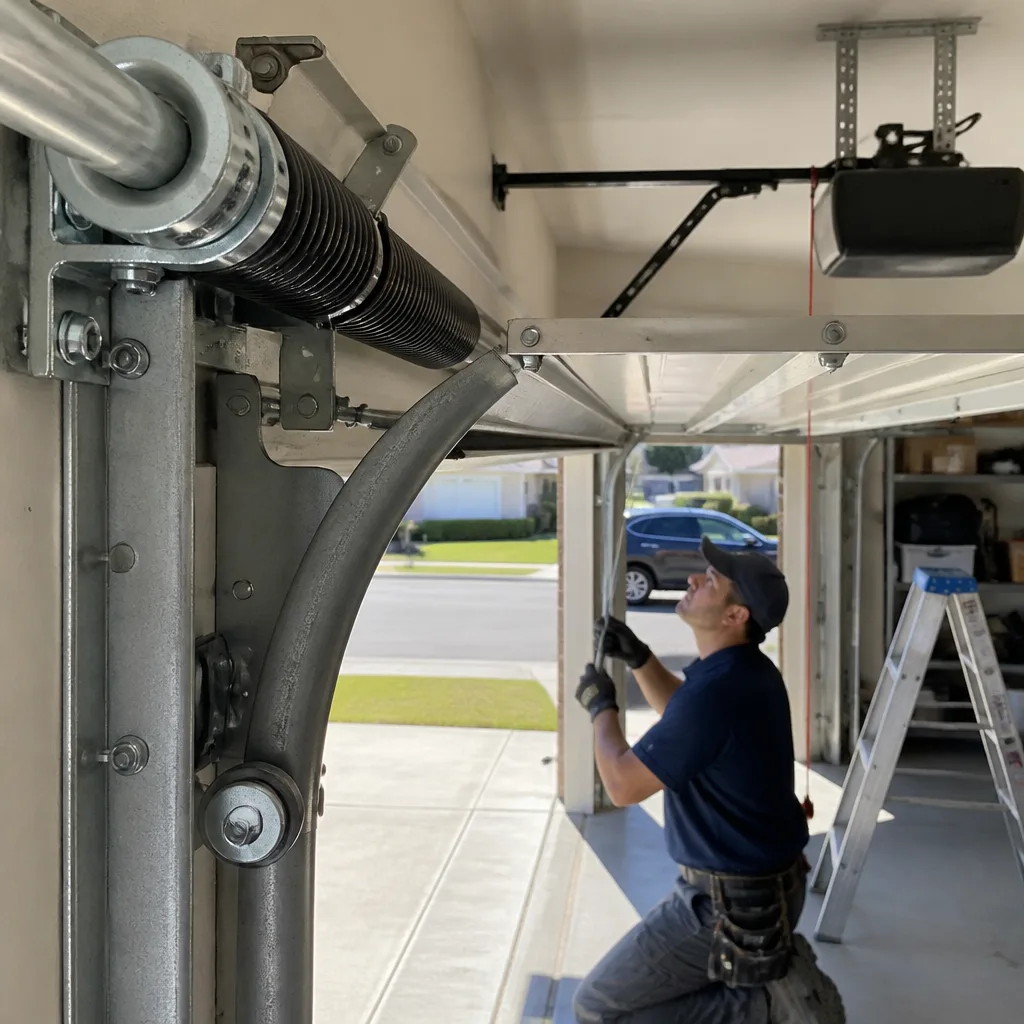 After
 Before
 After
 Before
 After