
Last updated November 2, 2026
 Raised-panel steel
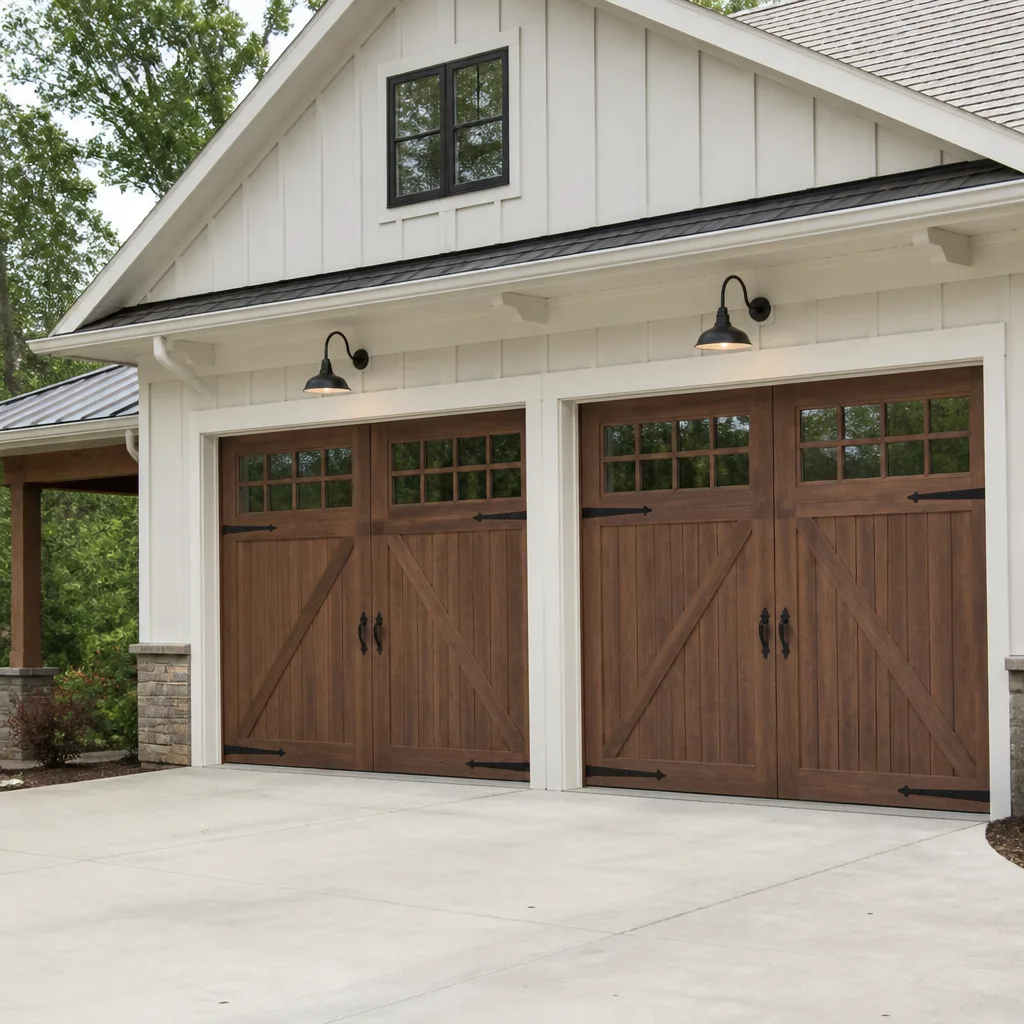 Carriage house
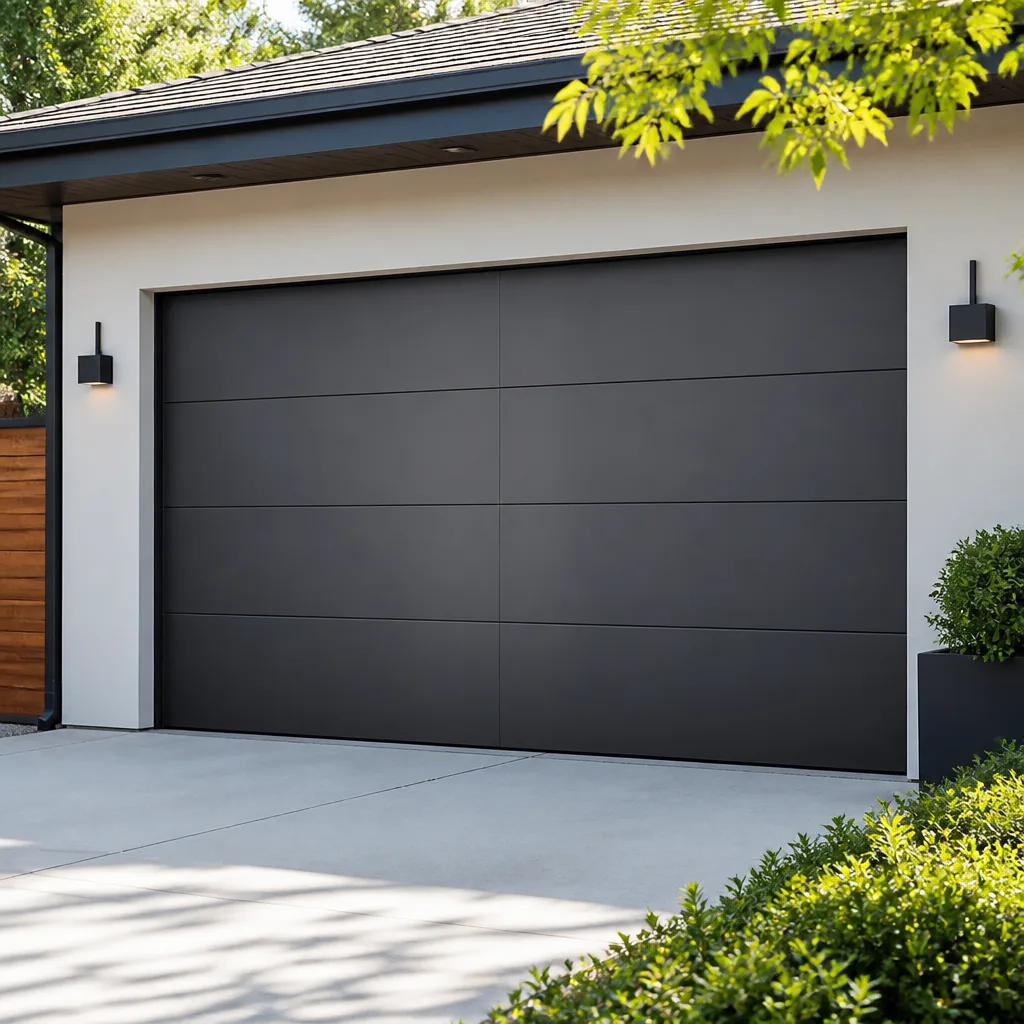 Modern flush
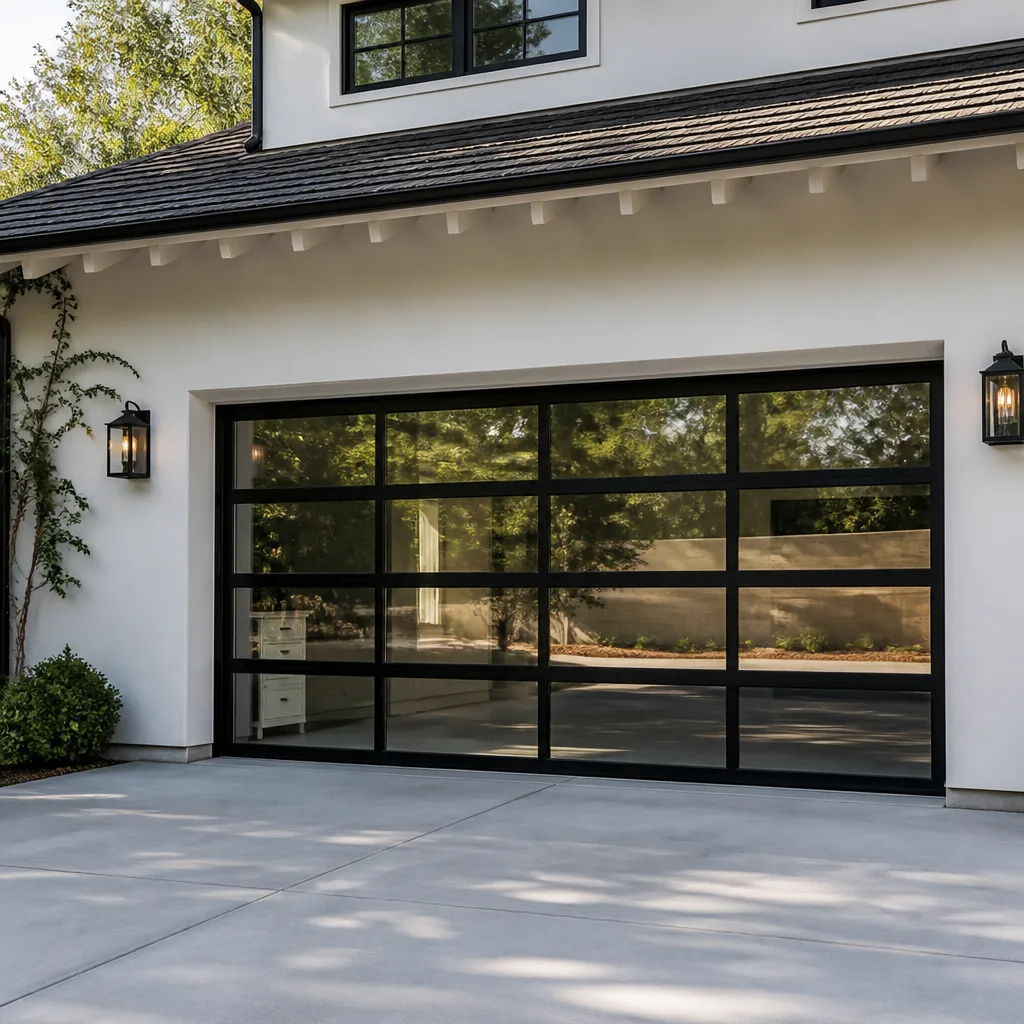 Full-view glass
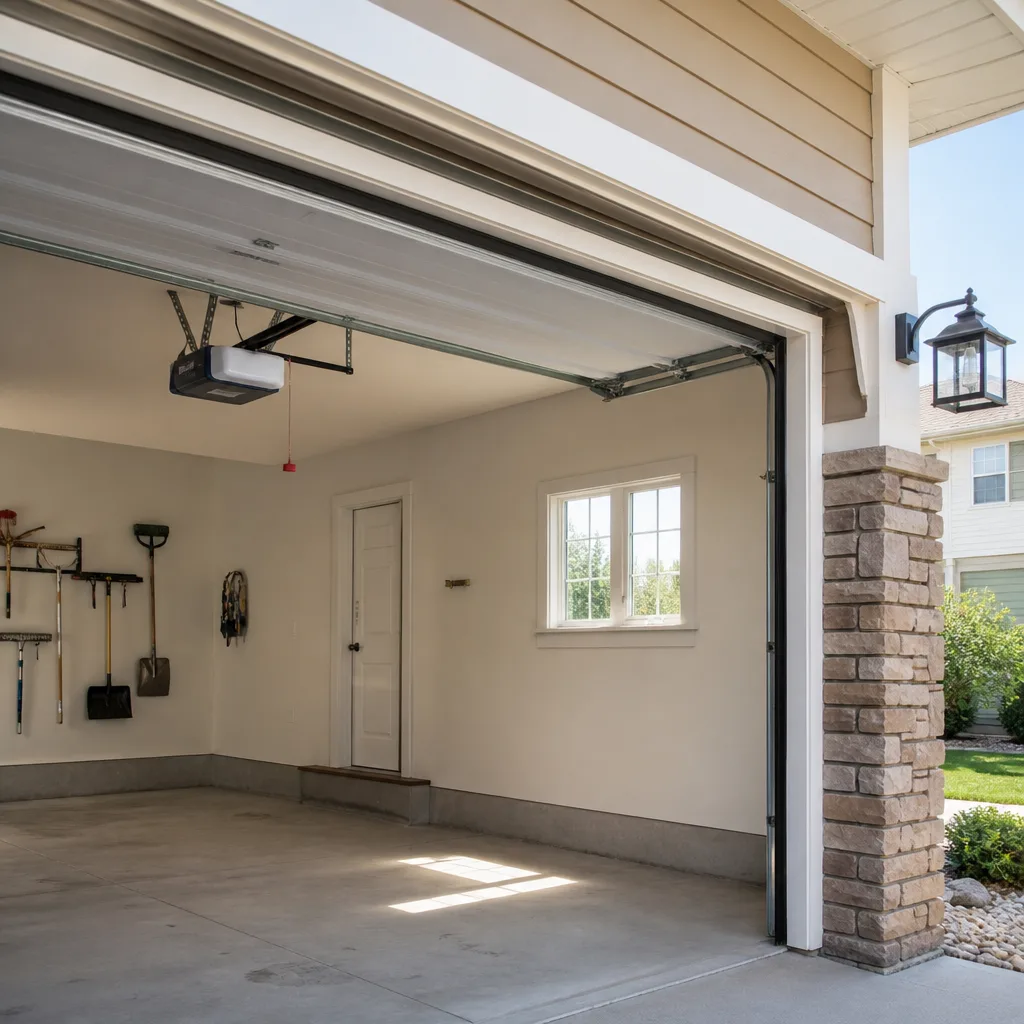 LiftMaster openers
 Chamberlain openers
Full 25-point door and opener safety check with every visit - springs, cables, rollers, tracks, and your LiftMaster or Chamberlain opener included
You get a price before we start. It does not change when the truck arrives.
Get your free estimateDIY vs Professional Garage Door: The Oxnard Homeowner’s Decision Guide
A torsion spring on a residential garage door is wound tight enough to send a steel rod through a car windshield, or a hand. That’s not an exaggeration. It happens. The question of whether to fix your own garage door in Oxnard is not a single yes-or-no, regardless of what half the advice online suggests. It’s a series of twelve smaller questions, and each one has a different answer based on the specific part that’s actually broken. This guide walks you through every major task, from the ten-minute fixes that genuinely save you money, to the ones where a single wrong move lands you in the emergency room. We’ve seen enough Oxnard garages, from RiverPark to Silver Strand, to know which is which.
Styles & brands we work with
- Raised-panel steel
- Carriage house
- Modern flush
- Full-view glass
- LiftMaster openers
- Chamberlain openers
Quick Answer
Most garage door work in Oxnard is not a single decision. Small, low-risk tasks like lubricating rollers, replacing weatherstripping, and realigning photo-eye sensors are reasonable DIY projects for a careful homeowner. Anything involving torsion springs, lift cables, or full panel replacement is not. The dividing line isn’t skill level: it’s whether a mistake can cause serious injury or thousands in follow-up damage. When the risk is disproportionate to the money saved, call a professional.
Table of Contents
- The Tension Problem: What Actually Makes a Garage Door Dangerous
- Genuinely Safe DIY: The Tasks That Won’t Hurt You
- Never DIY: The Three Tasks You Should Not Attempt
- The YouTube Problem: When Tutorials Lie to You
- Opener Repair and Reprogramming: The Brand-Specific Trap
- The Real Cost of a DIY Mistake in Oxnard
- The Middle Path: What to Prep Before the Technician Arrives
- Common Mistakes to Avoid
- When to Call a Professional
- Frequently Asked Questions
- The Bottom Line
The Tension Problem: What Actually Makes a Garage Door Dangerous
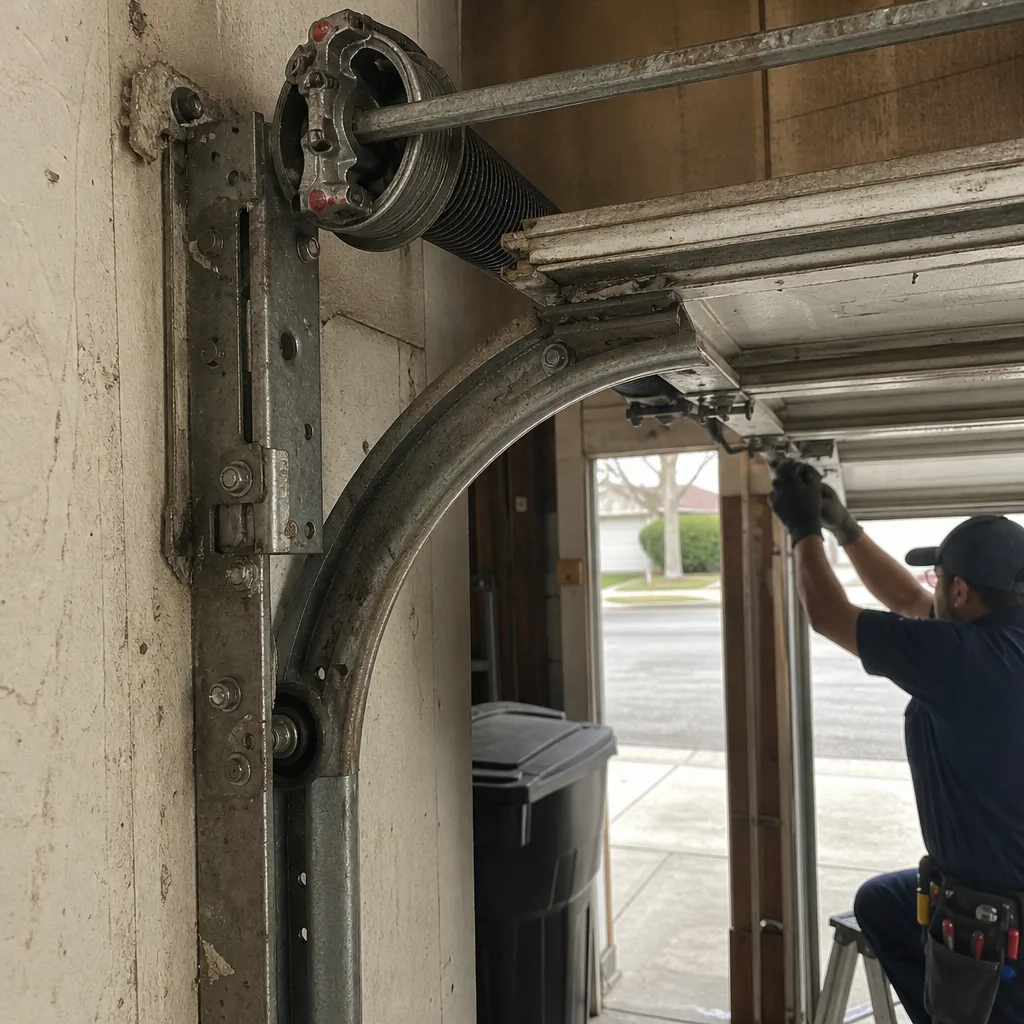
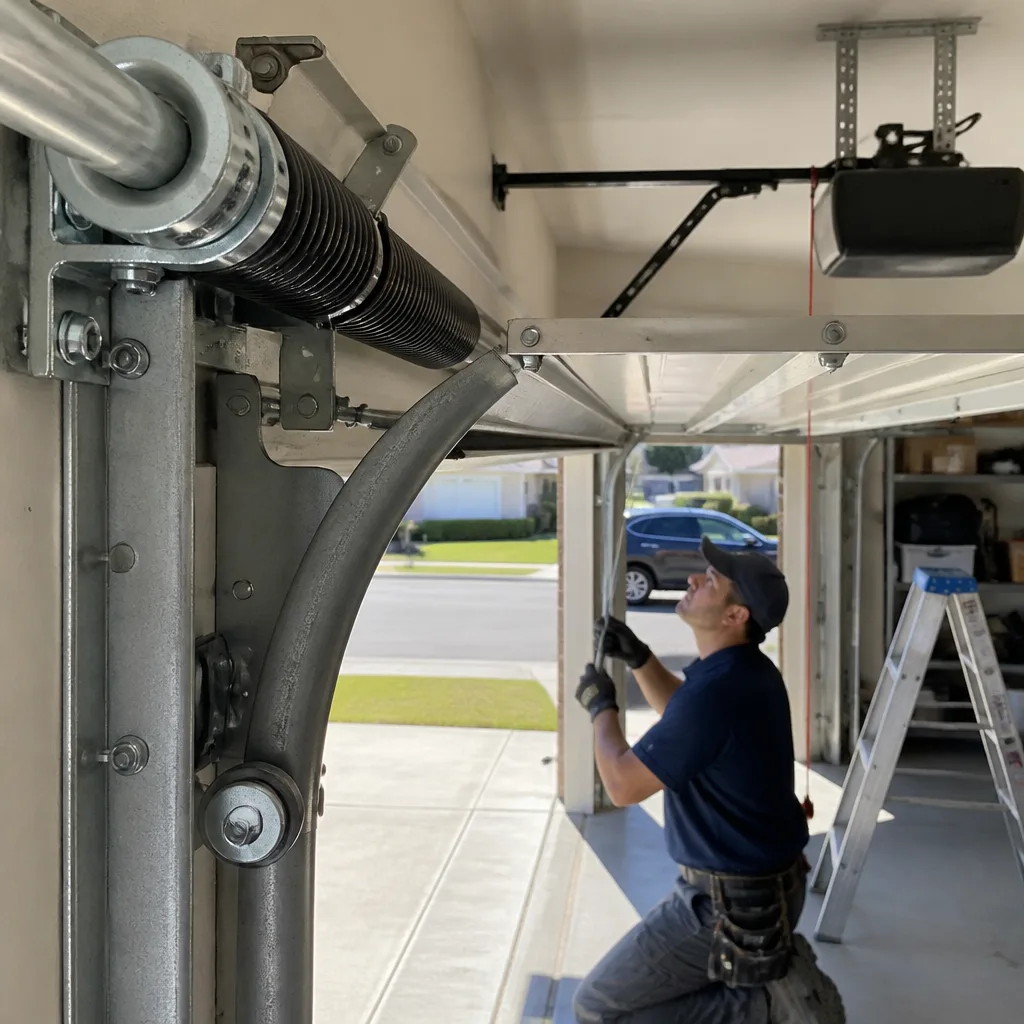
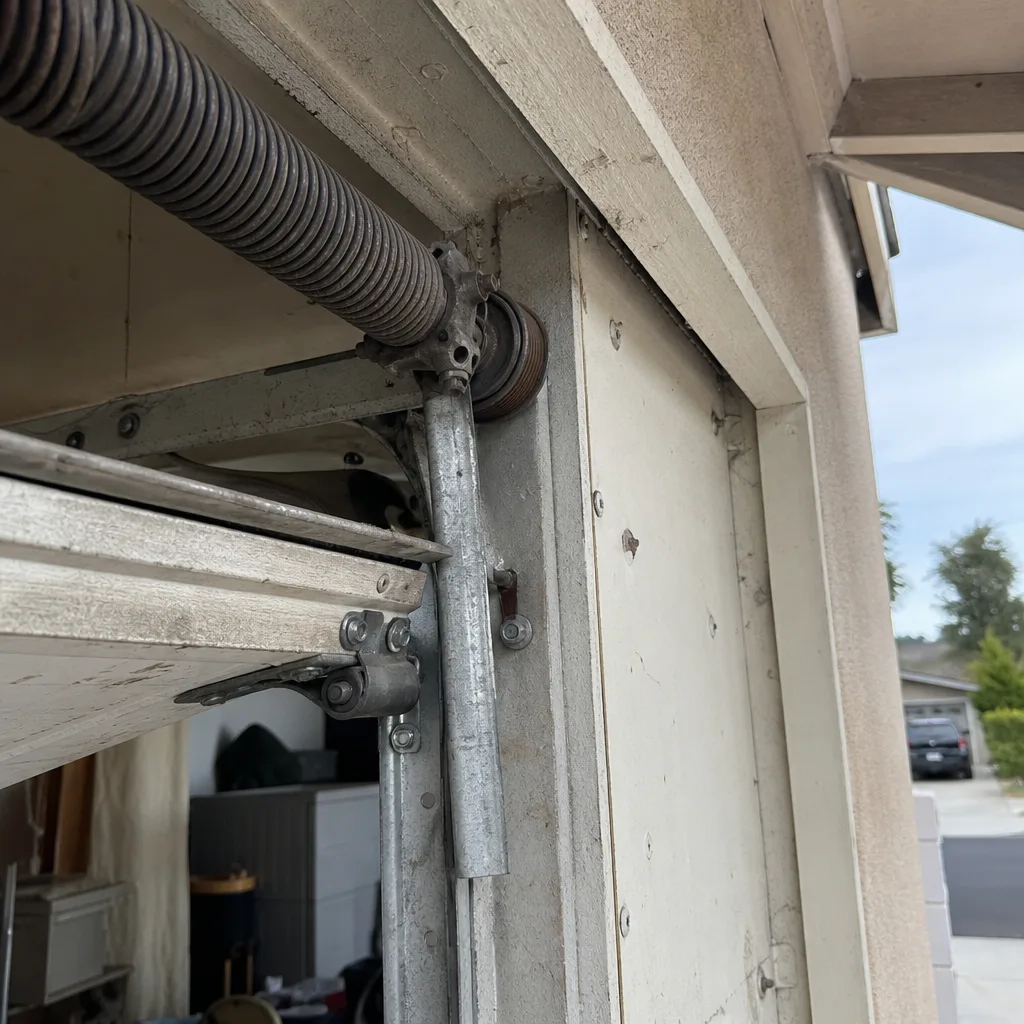
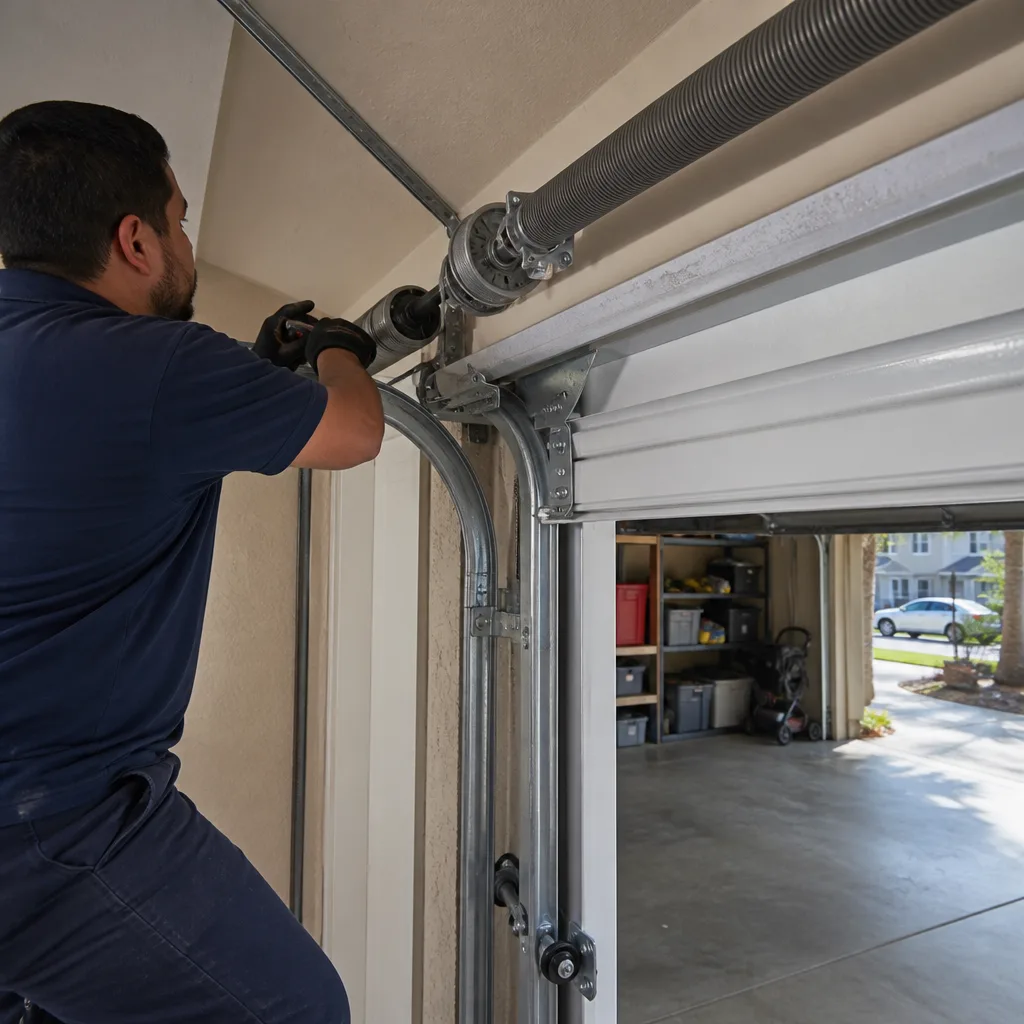
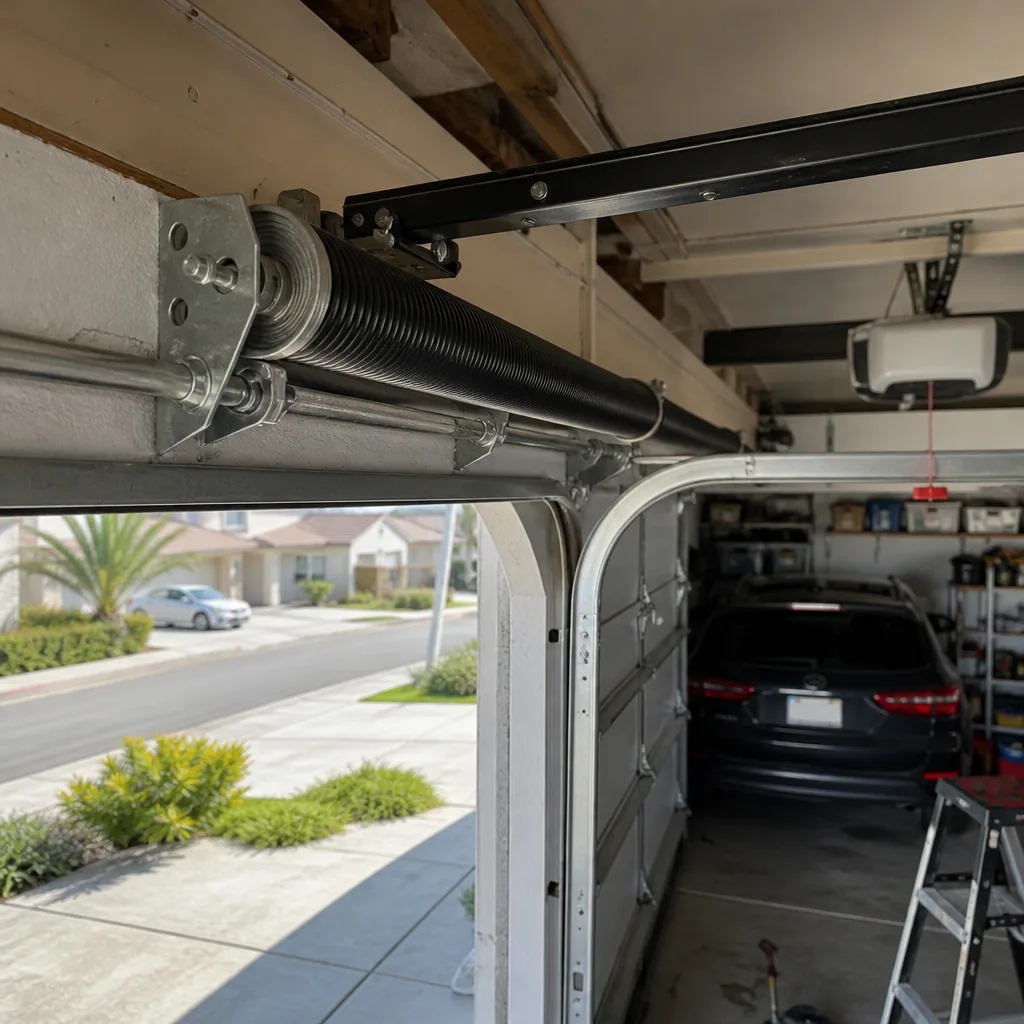
A standard 16-foot residential garage door in an Oxnard home weighs anywhere from 130 to 180 pounds, depending on the material. The door itself is not the hazard. That weight is counterbalanced by one of two spring systems: extension springs mounted on tracks above the door, or torsion springs mounted on a shaft directly over the header. Torsion springs, which are standard on nearly every home built in Oxnard after the mid-1990s, are wound to support the entire door weight at rest. That winding stores a tremendous amount of mechanical energy.
When a torsion spring snaps, it releases that energy in an instant. If you’re standing near the spring when it fails, the spring fragments can travel at high speed. The injury risk is not theoretical: garage door springs account for a significant number of emergency-room visits every year, and the typical injury involves lacerations, broken bones, or worse. This is not a component where you should learn as you go.
Extension springs are slightly less dangerous, but they are not safe either. These springs stretch and contract under load. If an extension spring fails, the broken end can whip through the air. Most older Oxnard properties, particularly bungalows and townhomes built before the 1990s, still use extension springs. The safety cable that runs inside the spring helps contain the break, but only if it was installed correctly, and only if it hasn’t rusted through.
The reason we spend so much time on the spring discussion is simple: when someone asks about Garage Door Repair in Oxnard, the broken part is usually a spring. It binds and corrodes in the marine air, especially within a mile or two of the water. And this specific repair is the one we most often see homeowners try, because replacing a spring looks simple on video. It is not simple. It is the one job where the learning curve can be measured in bodily harm.
Genuinely Safe DIY: The Tasks That Won’t Hurt You
Not every garage door issue requires a service call. Some Oxnard homeowners maintain their own doors for years, and they save a meaningful amount of money doing it. The key is knowing which tasks involve zero tension, zero lifting, and zero risk of a component failing under load. Here is the short list of what is genuinely safe.
1. Lubricating Rollers, Hinges, and Tracks
This is the single most beneficial DIY maintenance task. You need a can of white lithium grease or a silicone-based lubricant, a rag, and about ten minutes. Apply a small amount to each hinge pivot point, the roller stems, and the torsion spring itself. Oxnard’s coastal moisture accelerates surface rust, so a light coating helps prevent the grinding noise that signals a dry door. Do not use WD-40 as a primary lubricant. It displaces moisture but washes away quickly. Use a lithium or silicone product.
2. Replacing the Bottom Weatherstrip
The U-shaped rubber seal along the bottom of the door deteriorates quickly in sun and salt air. You’ll see cracks, gaps, or daylight under the door. Replacement strips cost between $15 and $40 for a standard 16-foot door, and the job requires no tools beyond pulling the old strip free and sliding the new one in. Some doors use a retainer channel that you’ll need to unfasten with a screwdriver. Total time: 20 to 30 minutes. This is the task most Oxnard homeowners should do themselves, because the material is cheap and the penalty for doing it wrong is simply redoing it.
3. Aligning Photo-Eye Sensors
Your opener has two small photo-eye sensors mounted near the floor, one on each side of the track. If they fall out of alignment, the door will refuse to close, or it’ll reverse immediately and the lights on the opener will blink. Most of the time you can fix this by loosening the wingnut on the sensor bracket, nudging the sensor until the indicator light stays solid, and tightening it back down. This is safe and takes five minutes.
4. Tightening Loose Hardware
Garage doors shake constantly. Nuts and bolts work loose, especially on track brackets and hinges. A socket set and five minutes will let you check every visible fastener and snug up anything that has backed out. This is safe because you are not working against spring tension. If a bolt shears off while you’re tightening it, that’s a sign of deeper damage, and that’s the point where you’d call us.
These four tasks are safe because they don’t involve touching the parts that carry load. You can do all of them without special tools, without a helper, and without any risk of the door slamming down. If that’s where your energy goes, DIY garage door maintenance in Oxnard is a smart move.
Never DIY: The Three Tasks You Should Not Attempt
There are three garage door repair tasks, and only three, that we would unambiguously tell an Oxnard homeowner never to attempt. When you understand why, the rest of this guide makes more sense. These are not questions of skill. They are questions of danger.
1. Torsion Spring Replacement or Repair
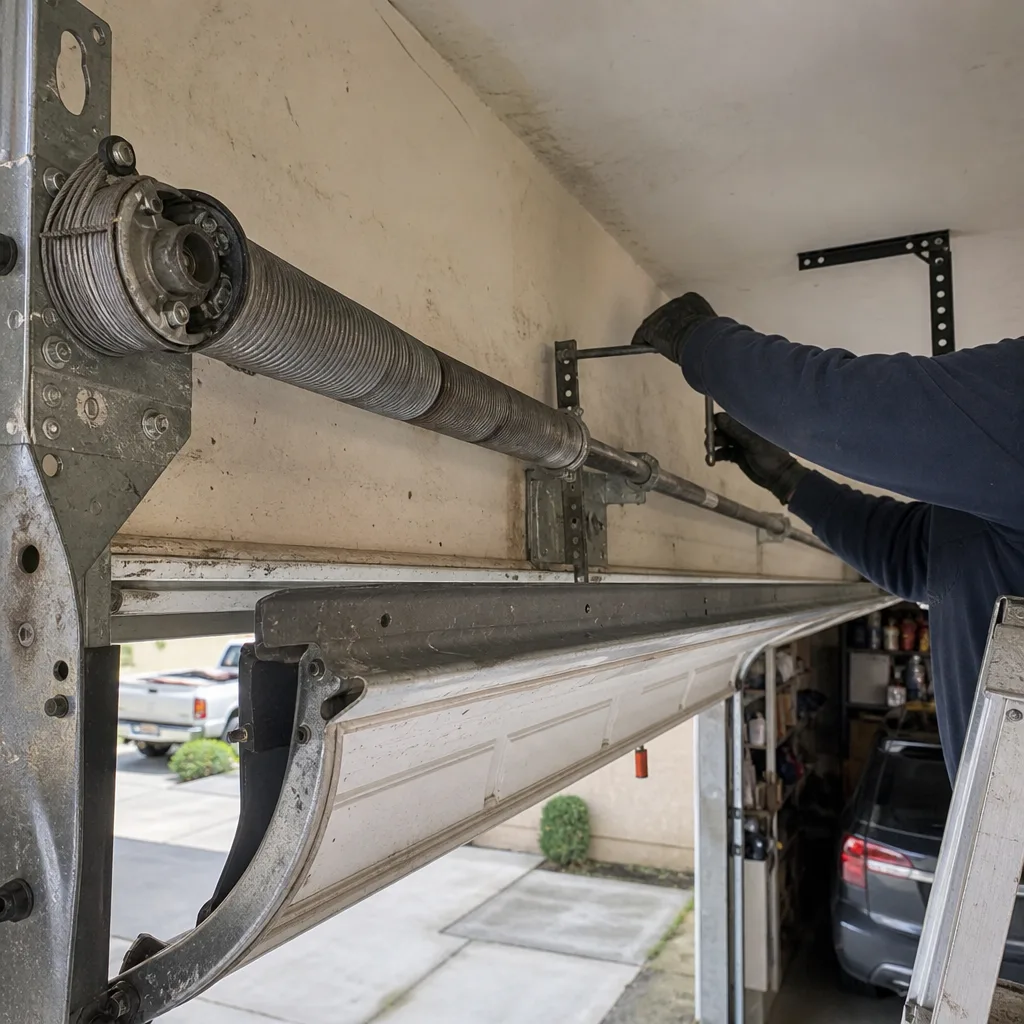
We covered the physics above. What needs to be said plainly: the winding bars used to adjust torsion springs are specific diameter steel rods, and if they slip, they fly. The spring is under up to seven full turns of tension. A slipped bar can break a wrist, take out an eye, or fracture a skull. A cracked spring that hasn’t failed is also under full tension and is still dangerous to touch. If you have a broken spring, do not open the door manually. Do not attempt to unwind the good spring to make the two sides match. Do not watch a YouTube video and decide to try it in the Oxnard heat, when metal fatigue from temperature cycling has already weakened the spring. This is the one job that can kill you.
2. Lift Cable Replacement or Adjustment
The cables on each side of the door run from the bottom bracket over a drum and connect to the spring system. They carry the full door weight when the door is closed. If a cable snaps or comes off the drum while the door is in motion, the door can become unstable and bind. Replacing or re-seating a cable requires unloading the spring tension, and that’s the exact step that makes this a professional-only job. In Oxnard we see more cable issues in older homes with extension springs, where rust and exposure have degraded the cable fiber under the vinyl coating.
3. Full Panel Replacement
A single garage door panel is not light. The bottom panel on a double door can weigh 40 pounds, and replacing a panel requires disassembling the door from the track system while the whole assembly is still counterbalanced. If the job goes wrong, you have a partially disassembled door that no longer closes, which leaves your Oxnard home unsecured. Panel replacement is also usually a false economy. If the door is more than ten years old, the replacement panel will not match the faded color of the rest of the door, and the section hinges will not line up properly with existing hardware. The better path is a conversation about whether Garage Door Installation in Oxnard makes more sense than patching an aging door.
There is a fourth category that is less dangerous, but still not a good DIY project, and that’s any work requiring you to remove the opener motor. The motor unit hangs above your car, and dropping it means replacing it. Save that for professional hands.
The YouTube Problem: When Tutorials Lie to You
A certain percentage of garage door repair tutorials on YouTube are filmed in climate-controlled shops with brand-new doors, good lighting, and a stand-in technician who has done the same repair hundreds of times. The real world does not work that way. Here is what those videos don’t tell you, and why the garage door in your Oxnard home does not match the one in the video.
Rust and corrosion are the great equalizer. A spring replacement on a fresh door takes ten minutes. A spring replacement on a ten-year-old door in a coastal climate means fighting corroded set screws, rusted center-bracket bolts, and a spring that has welded itself to the shaft. The video will show the bolts turning smoothly. Yours will not. The moment you strip a set screw on a torsion spring, the job goes from a half-hour project to a three-hour problem involving a grinder and a broken bolt extractor.
Bearing plates and drums are never shown in their true condition. Most tutorials show a clean bearing plate that rotates freely. On many Oxnard doors, the bearing plate is rusted, the cables have sawed a groove into the pulley, and the spring rate no longer matches the original manufacturer spec because the door has been repaired before, possibly with mismatched parts.
The door in the video was installed recently. Your door may have shifted. Track brackets may be loose, the opener rail may be angled, and the header above the opening may have settled. All of these factors change the repair approach, and none of them appear on video.
This is not an argument against using YouTube to understand how your door works. It’s an argument for using it as an educational tool, not a repair manual. Watching a spring repair video is a great way to understand why the job should be left to someone who has done it a hundred times. That’s the real lesson.
Opener Repair and Reprogramming: The Brand-Specific Trap
Opener problems are a special category in the DIY discussion. They rarely involve the same level of physical danger as springs, but they carry a different kind of risk: a botched reprogramming job that leaves your door dead, your remotes wiped, and your security system compromised.
Here is the issue: every major opener brand has its own programming sequence. A LiftMaster uses a specific button order to clear codes. A Chamberlain unit syncs differently. A Genie requires a different reset procedure. A Craftsman opener made in 2002 behaves differently than a Craftsman unit made in 2018, even though both carry the same nameplate. The generic instructions in the manual are often wrong for the age and revision of the unit you own.
Worse, many homeowners make the mistake of trying to “reset” an opener that isn’t actually broken. When a door refuses to close, the problem is usually the photo-eye alignment, sometimes the travel limits, and occasionally the logic board. Performing a factory reset on the opener erases all remote programming and all travel-limit settings. Now you have a door that won’t move at all, and you get to spend an afternoon re-learning the system. If the original problem was a sensor alignment, you’ve replaced a five-minute fix with a three-hour job.
Safety reversal calibration is the one DIY opener task that we see go wrong more than any other. Every opener made after 1993 must reverse when it detects an obstruction. The calibration involves setting the force limits so the door reverses under pressure but does not nuisance-reverse every time it closes. Homeowners tend to crank the force setting up so the door will “push through” a sticking roller or a stiff hinge. That is exactly how injuries happen. A door that doesn’t reverse when it hits something is a door that can crush a child or a pet. We handle Garage Door Opener Repair in Oxnard on a regular basis, and the most common call is a door that won’t close, followed by a door that won’t reverse. Both are worth professional attention.
The brand issue is real. A technician who specializes in LiftMaster, Chamberlain, Genie, Clopay, Amarr, Wayne Dalton, Craftsman, and Raynor systems doesn’t have to guess at the programming sequence. That knowledge is the difference between a fifteen-minute fix and an afternoon of frustration in a hot Oxnard garage.
The Real Cost of a DIY Mistake in Oxnard
When someone asks whether a specific repair is worth attempting, the first thing they calculate is the parts cost versus the labor cost. A torsion spring costs $50 to $80 at a local supplier. A professional spring replacement in Oxnard runs higher than that, so the DIY approach looks like it saves money. For a detailed look at pricing, see our Garage Door Cost Breakdown: The Oxnard Homeowner’s Reference for 2026. That calculation misses three things.
First: the mistake itself. Stripping a set screw on a wind-up cone means replacing the entire center bracket assembly. Snapping a winding bar because you picked the wrong diameter rod means buying a new shaft. Dropping the torsion tube means replacing the spring system entirely. These are not hypotheticals. We have walked into Oxnard garages where the homeowners’ DIY effort turned a $200 spring repair into a $600-plus repair, because the failed attempt damaged the shaft, the cables, and the bearing plates.
Second: the liability question. If your homeowner’s insurance carrier determines that a garage door injury or subsequent property damage was caused by an unlicensed repair you performed yourself, your claim may be denied. Most policies cover accidents, but they do not cover damage that stems from self-inflicted repair work on a component that should have been professionally serviced. The insurance implications matter more than the parts cost, every time.
Third: the door’s real value. A functioning garage door protects your home, your vehicles, and in many Oxnard homes, the entrance your family uses most. That door has a replacement value of $2,000 to $5,000 installed. Risking the door’s structural integrity to save $120 in labor is not a rational trade. The right way to think about it: the spring lasts seven to ten years. Amortize the professional installation cost over that lifespan, and you are paying roughly $15 to $20 per year for the peace of not handling a tension-loaded component. That’s cheap insurance.
The repair-versus-replace conversation is worth having before you spend a dime. If the door is old, the panels are rusting, and the torsion system has failed, putting money into a partial repair may be the wrong call. The same team that fixes doors can also source and install new ones. It’s a different conversation, but it starts from the same insight: some repairs are not worth making on a door that has outlived its useful life.
The Middle Path: What to Prep Before the Technician Arrives
There is a middle path between doing the dangerous work yourself and calling a technician to handle every small task. It involves preparation that reduces billable time without touching anything under tension. This is the smart way to save money, and it’s what we recommend to every Oxnard homeowner who wants to keep the total bill down.
- Photograph the broken part before you do anything. Three clear photos: the spring, the cables, and the opener unit. Show the label on the spring and the manufacturer plate on the opener. This lets the technician bring the right parts on the first trip.
- Clear the work area. Move cars out of the garage, move bikes and storage bins away from the tracks, and provide at least four feet of clearance on each side of the door. A technician who can move freely works faster.
- Test the door once, safely. Try opening and closing the door one cycle. Note exactly what happens: Does it open? Does it close? Does it stop halfway? Does it make a specific sound? Writing down the exact symptom saves diagnosis time.
- Pull the manual out of the opener. If you still own the instruction manual for your LiftMaster, Chamberlain, or Craftsman opener, set it out. The programming specifications and model number are quicker to find on paper than on a faded label.
- Tell your technician about prior repairs. If you replaced the rollers two years ago, or if a neighbor helped you adjust the springs last spring, say so. Prior work changes the diagnosis.
- Ask for a flat quote before work begins. A reputable Oxnard garage door company quotes the full repair cost before turning a single wrench. If a technician won’t give you a number up front, that’s a flag.
None of these steps involves touching a spring, cable, or drum. All of them reduce the time a professional spends in your garage, and time is what you’re paying for. That’s the smartest DIY approach there is.
Common Mistakes to Avoid
- Spraying WD-40 on everything. WD-40 is a water displacer, not a lubricant. It strips away existing grease and leaves metal drier than before. In Oxnard’s salty air, that accelerates rust on rollers, hinges, and springs. Use white lithium grease or a silicone spray instead.
- Failing to mark the spring position before touching anything. If you’re replacing an extension spring and you don’t note exactly where the S-hook attaches, you’ll spend an hour guessing at the correct tension. A grease pencil mark takes two seconds.
- Forcing the door open when a spring is broken. A broken spring means the door’s full weight is unsupported. Lifting it manually can cause the door to fall and the remaining spring to snap. Leave the door closed and call for repair.
- Resetting an opener to fix a sensor problem. A factory reset wipes all programming and does nothing to fix misaligned photo-eyes. Check the sensor alignment first, always.
- Buying parts by price alone. A $35 torsion spring from a big-box store may not match the original spring’s gauge or wind direction. Mismatched springs cause premature failure and can damage the opener. Buy from a garage door supply source that matches springs to the door’s actual weight.
- Ignoring a door that’s making a new sound. A grinding noise means a dryer roller, a popping sound means a failing spring, and a squeal means a bad bearing. Each of these gets more expensive the longer you wait. The Oxnard climate doesn’t give components time to recover.
When to Call a Professional
If any of these apply, the DIY window has closed and it’s time to make the call: you have a broken torsion spring; a cable is frayed, crimped, or off the drum; the door won’t reverse when it hits an obstruction; you own a Genie or Raynor opener with a programming issue you can’t identify; or the door makes a sound you’ve never heard before. These are not situations where a careful homeowner should be in the garage with a socket set. Garage Door Repair Oxnard offers free estimates in Oxnard. Call (833) 706-7472, describe the symptom exactly, and we’ll give you a straight answer on what it’ll take to get the door back up and running.
Garage doors are all we do. That focus means the diagnosis is faster, the parts match the door, and the repair is done right the first time. If you own a Wayne Dalton, a Craftsman, a Raynor, or a LiftMaster, we work on your brand. When the job calls for a specialist, call a specialist.
Frequently Asked Questions
No. Torsion springs are under enough stored tension to cause permanent injury or death if they slip while you’re working on them. A professional replacement in a typical Oxnard home costs a fraction of what an emergency room visit costs, and the job is covered by the technician’s training and insurance. If your spring is broken, leave the door closed and call (833) 706-7472.
The general rule: if the door is more than 15 years old, has rust through multiple panels, and has failed in more than one component, replacement is worth pricing. If the failure is a single spring and the door otherwise opens smoothly, repair makes more sense. We’ll tell you which one makes sense for your specific door, and a free estimate in Oxnard costs you nothing.
The single most common mistake is attempting a spring replacement with improvised tools, usually metal rods that are too thin or too short for the winding cone. This is also the most dangerous mistake we see. The second most common is performing a full opener factory reset to fix a door that simply needs its photo-eyes realigned.
Yes, and lubrication is the key. A light coating of white lithium grease on the torsion spring, the hinges, and the roller stems creates a barrier against the marine moisture that saturates the air in Oxnard, especially from the harbor to the beaches. Reapply every six months, and wipe down surface rust when you see it starting to form.
Some openers and door systems require brand-specific programming knowledge that isn’t documented in generic manuals. A technician with experience across LiftMaster, Chamberlain, Genie, Clopay, Amarr, Wayne Dalton, Craftsman, and Raynor doesn’t have to guess at the sequence, which often means the job finishes faster and with fewer callbacks than a generalist would produce.
Repair costs in Oxnard vary by component: spring replacement typically lands in the mid-hundreds including parts and labor, sensor realignment is a minimum-charge visit, and opener replacement can run higher depending on the model and brand. There is no reliable flat rate without seeing the door, which is why we quote every repair before starting work. Estimates are free. Call (833) 706-7472 for an exact number on your specific door.
The Bottom Line
The DIY-versus-professional decision on a garage door is not about courage or competence. It’s about risk. Lubricating your hinges, swapping a weatherstrip, and realigning the photo-eyes are safe, straightforward tasks. Touching a torsion spring, a lift cable, or a recalcitrant opener that needs brand-specific programming is not. The Oxnard coastal climate adds rust and corrosion that makes every high-tension job harder than any tutorial video suggests, and the real cost of a mistake is measured in hospital bills, insurance deductibles, and days with an unsecured garage. Know which side of the line your specific repair falls on. When it lands on the wrong side, call Garage Door Repair Oxnard at (833) 706-7472 for a free estimate and the right fix for your specific system.
Written by the team at Garage Door Repair Oxnard, serving Oxnard since 2016.
See the difference
 Before
 After
 Before
 After
 Before
 After